
When sourcing EV chargers, one of the most common questions buyers ask is: “Why is the warranty typically only 2 years?”
At first glance, this may seem short—especially for a product expected to operate for many years. However, from a manufacturer’s perspective, the 2-year warranty is not arbitrary. It reflects a careful balance between product reliability, real-world operating conditions, and long-term service risk.
In this article, we explain the logic behind the standard warranty period and what buyers should truly focus on when evaluating EV charger quality.
What Is the Standard Warranty for EV Chargers?
Across global markets—whether in Europe, North America, or Asia—the standard warranty for most EV chargers is 2 years.
This applies to:
- AC wallboxes
- Portable EV chargers
- Many entry- to mid-level DC chargers
For EV charging adapter, the warranty is 1 year.
At GREENC, we provide 2-years wanrranty for our EV chargers, every EV charger has a bar code number, which include the production date, it’s efficient for us to manage the warranty.
Some premium manufacturers may offer extended warranties (3–5 years), but these are usually tied to specific conditions such as controlled environments, approved installation, or additional cost.
Why 2 Years Became the Industry Standard
The 2-year warranty has evolved as a practical industry benchmark, based on several factors:
1. Early failure detection (infant mortality period)
Most manufacturing defects—if any—will appear within the first 12–24 months. A 2-year warranty comfortably covers this critical period.
2. Global supply chain alignment
Core components (such as relays, contactors, and control modules) are often supplied with similar warranty terms, making 2 years a standardized baseline.
3. Cost and risk control
Warranty is not just a promise—it is a long-term service liability. Extending warranty significantly increases after-sales costs, which ultimately affects product pricing.
4. Diverse usage scenarios
Unlike household appliances, EV chargers operate in highly variable conditions. A unified 2-year policy helps manufacturers manage unpredictable risks across global markets.
Key Components That Influence Warranty Duration
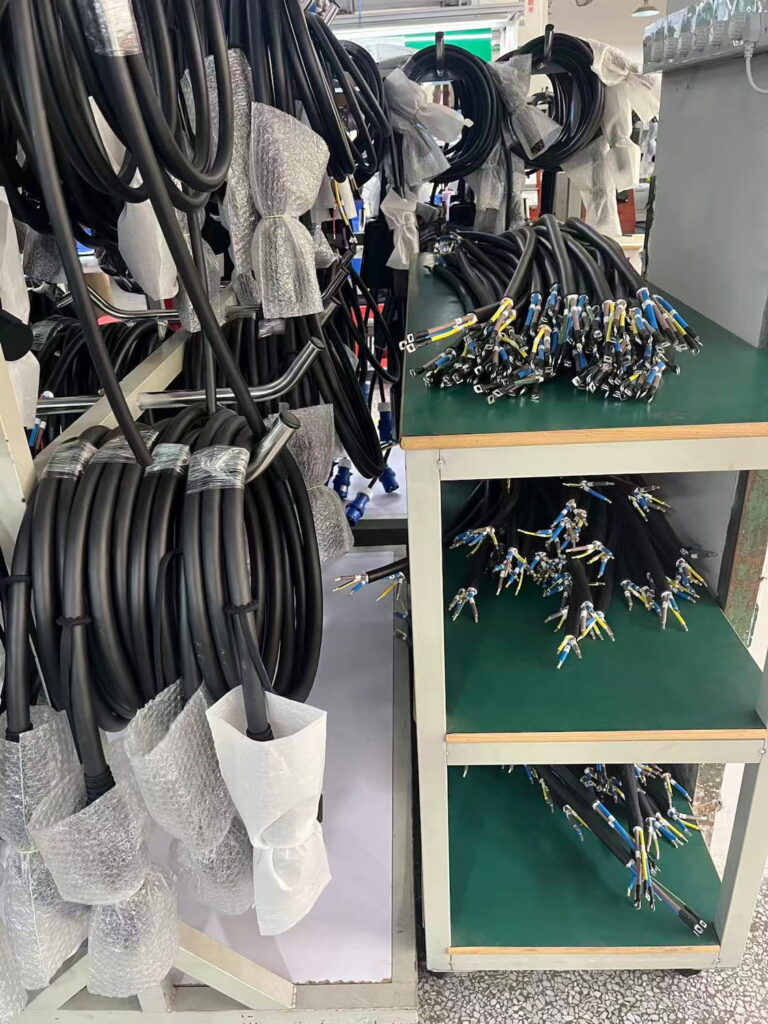
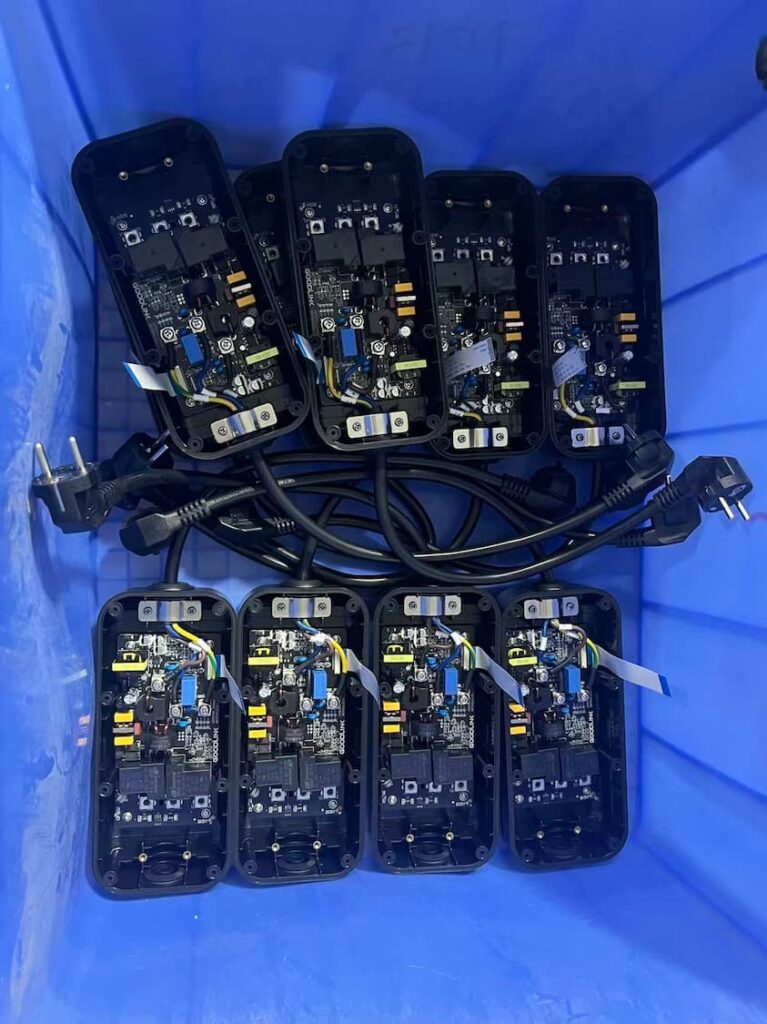
An EV charger is not a simple device—it integrates multiple critical components, each with its own lifespan and stress factors:
- Control board (PCB) – Sensitive to heat, humidity, and voltage fluctuations
- Charging cable & connector – Subject to mechanical wear, bending, and user handling
- Relays and contactors – High switching frequency leads to gradual wear
- Protection devices – Surge protection, RCD, and other safety components
While many of these parts are designed to last far beyond 2 years, their durability depends heavily on real-world usage conditions.
Environmental Factors That Affect EV Charger Durability
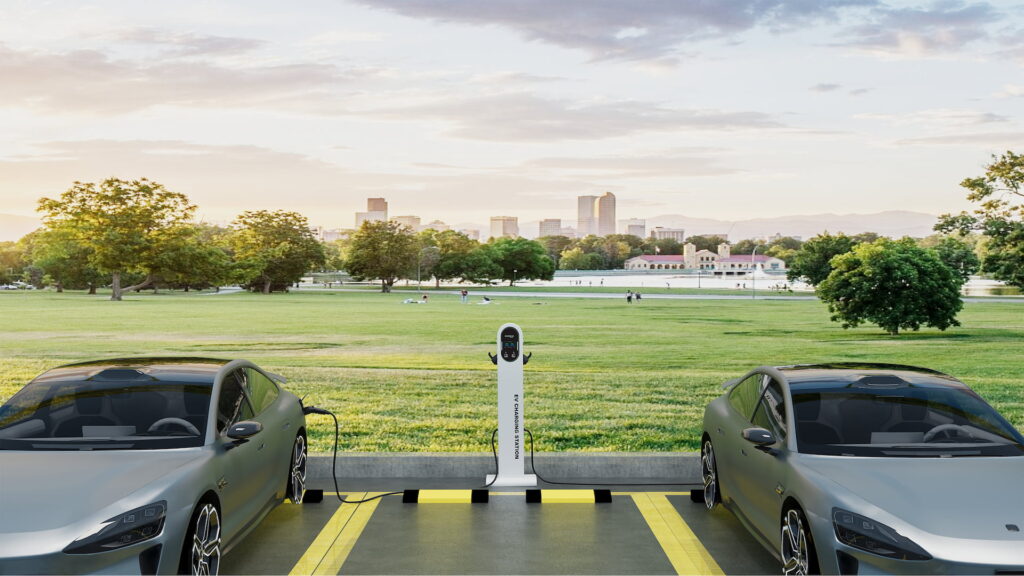
From a manufacturer’s point of view, environmental uncertainty is one of the biggest reasons warranty periods remain conservative.
EV chargers are often installed in:
- Outdoor parking areas
- Coastal regions (high salt exposure)
- Industrial zones (dust and vibration)
- Extreme climates (very high or low temperatures)
Even with high protection ratings (such as IP65), long-term exposure to harsh environments can accelerate aging of internal components.
Because manufacturers cannot fully control installation environments, warranty periods must account for these variables
Usage Frequency and Its Impact on Warranty Policy
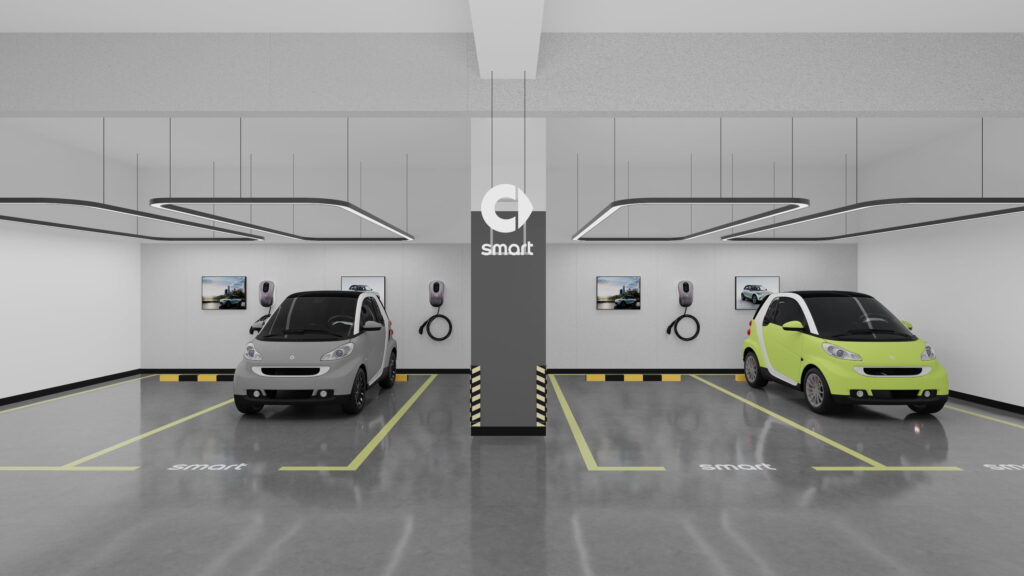
Not all EV chargers are used the same way:
- Residential chargers may operate 1–2 times per day
- Commercial chargers may run continuously, multiple cycles per hour
Higher usage means:
- More thermal cycles
- Faster mechanical wear
- Increased electrical stress
From a design standpoint, chargers are built for durability—but from a warranty standpoint, it is difficult to standardize coverage across such different usage intensities.
This is another reason why 2 years is considered a balanced and fair baseline.
How to Evaluate a Reliable EV Charger Beyond Warranty
A longer warranty does not always mean a better product. Buyers should look deeper into:
1. Component quality
- Are industrial-grade relays and connectors used?
- Is the cable sourced from a specialized manufacturer?
2. Certifications
CE, TUV, ETL compliance ensures safety and baseline reliability
3. Thermal and protection design
- Efficient heat dissipation
- Multiple protection mechanisms (overcurrent, overvoltage, leakage)
4. Manufacturing consistency
- Quality control processes
- Testing standards before shipment
These factors often have a greater impact on long-term performance than warranty duration alone.
Why a Good Manufacturer Matters More Than Warranty Length
From a buyer’s perspective, it’s easy to compare products based on warranty years. But in reality, the manufacturer behind the product matters far more.
A reliable manufacturer will offer:
- Stable product design and engineering
- Strict quality control during production
- Consistent component sourcing
- Responsive and professional after-sales support
In contrast, an extended warranty without strong technical support may create more risk than value.
Conclusion
The 2-year warranty for EV chargers is not a limitation—it is a practical, experience-based standard shaped by engineering realities and global usage conditions.
In most cases, a well-designed EV charger will operate reliably for many years beyond the warranty period.
For buyers, the smarter approach is not to focus solely on warranty length, but to evaluate the overall quality, design, and credibility of the manufacturer.


