
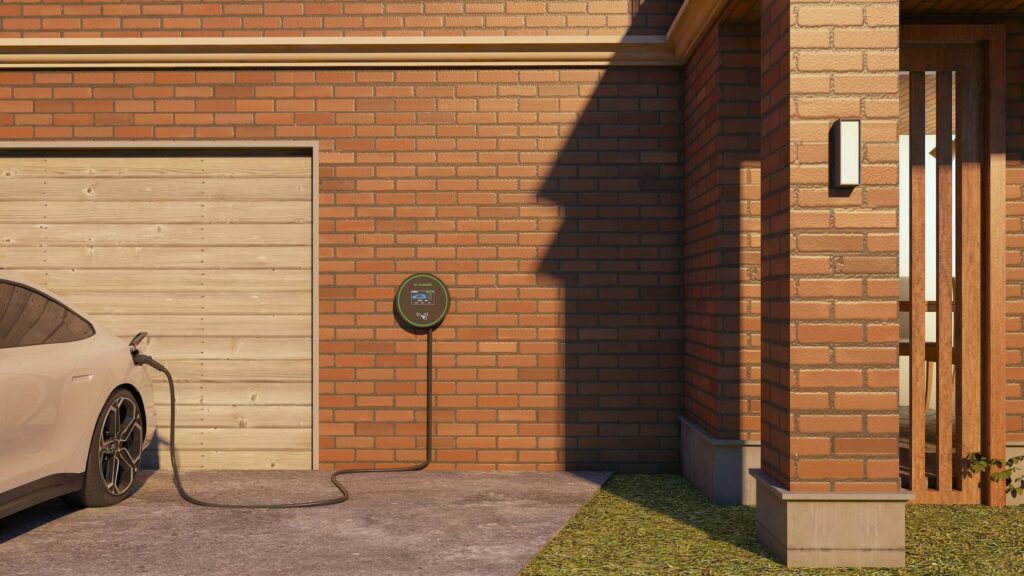
As electric vehicles (EVs) become more popular worldwide, understanding how EV chargers work—and what functions they offer—is essential for every new EV driver. Choosing the right charger is not just about power; it’s about safety, efficiency, and convenience.
We’ll break down the key functions of EV chargers in a simple, practical way, helping you make informed decisions and get the most out of your EV.
What Is an EV Charger?
An EV charger, also known as Electric Vehicle Supply Equipment (EVSE), is a device that delivers electricity from a power source to your electric vehicle. It ensures safe, controlled, and efficient charging.
Modern EV chargers do much more than just “supply power”—they include intelligent features designed to protect your vehicle, optimize charging time, and improve user experience.
EV Chargers Are Not Just Power Suppliers
At the most basic level, an EV charger transfers electricity from the grid to your car. But unlike a standard appliance, it cannot simply push power blindly into the battery.
Instead, every charging session is a controlled process. The charger first establishes communication with the vehicle, confirms compatibility, and only then begins delivering current under strict limits. Throughout the session, it continuously adjusts output based on battery condition, temperature, and system feedback.
This is why a proper EV charger is essential—using an uncontrolled power source would risk damaging the battery or creating serious safety hazards.
What Functions Do GREENC EV Chargers Have

Understanding what an EV charger actually does (beyond simply charging) will help you avoid common mistakes, save money, and extend the life of your vehicle
1. Power Delivery and Charging Control
The primary function of our EV charger is to deliver electricity to your vehicle’s battery. However, it does this in a controlled manner:
- Adjusts current based on vehicle capacity
- Prevents overcharging
2. Safety Protection Mechanisms
Safety is one of the most critical aspects of EV charging. A high-quality charger includes multiple protection features:
- Overvoltage protection
- Overcurrent protection
- Short circuit protection
- Leakage (RCD) protection
- Over-temperature protection
- Ground protection
- Lightning protection
- Surge protection
- Under voltage protection
These protections safeguard both the user and the vehicle, especially during long charging sessions.
3. Smart Communication with the Vehicle
GREENC EV chargers communicate with the vehicle in real time. This allows:
- Automatic start/stop of charging
- Monitoring battery status
- Adjusting charging speed dynamically
This communication ensures compatibility across different EV models and prevents charging errors.
4. Adjustable Charging Power

Our EV chargers allow users to adjust charging current or power levels. This is especially useful when:
- Your home electrical capacity is limited
- You want to charge during off-peak hours
- You need slower charging to protect battery health
This flexibility is a key advantage for both residential and commercial users.
5. Scheduling and Timer Functions
Smart EV chargers often include scheduling features that let you:
- Charge during off-peak electricity hours
- Reduce energy costs
- Avoid grid overload
For example, you can set your charger to start at midnight when electricity rates are lower.
6. Connectivity and Smart App Control
The EV chargers support connectivity via:
- Wi-Fi
- Bluetooth
- Mobile app
With these features, users can:
- Monitor charging status remotely
- Start or stop charging via smartphone
- Track energy consumption
- Receive notifications
This adds convenience and control, especially for busy EV owners.
7. User Authentication and Access Control
For public or shared chargers, access control is essential. Common methods include:
- RFID cards
- Mobile app authorization
- QR code scanning(OCPP)
This prevents unauthorized use and allows operators to manage users effectively.
8. Cable and Connector Compatibility
EV chargers are designed to support different connector types, such as:
- Type 1 (SAE J1772)
- Type 2 (IEC 62196)
- CCS (Combined Charging System)
- Tesla(NACS) connectors
- GB/T connectors
Ensuring compatibility is crucial when selecting a charger for your market or vehicle type.
The Invisible “Conversation” Between Charger and Vehicle

One of the most overlooked functions of an EV charger is communication.
When you plug in, the charger and the car begin a handshake process. The vehicle essentially says, “Here’s what I can accept,” and the charger responds, “Here’s what I can safely deliver.” Only when both sides agree does charging begin.
This interaction continues the entire time. If the battery starts to heat up, the charger reduces current. If the battery nears full capacity, charging slows down automatically.
From a user perspective, it feels simple. Behind the scenes, it’s a constant negotiation designed to protect one of the most expensive components of your EV—the battery.
Safety Is Built Into Every Second of Charging
Unlike fueling a gasoline car, EV charging happens over a longer period—often hours. That means safety isn’t just a feature; it’s an ongoing process.
A well-designed charger is continuously monitoring for abnormalities. If it detects a voltage spike, current overload, leakage, or overheating, it reacts instantly—either adjusting output or shutting down entirely.
This matters even more in real-world conditions. Outdoor installations face rain, dust, and temperature changes. Indoor setups may deal with unstable household wiring. Without proper protection systems, these factors could lead to equipment failure or worse.
Smart Features Are Becoming the Standard
Modern EV chargers are increasingly connected devices. This shift is changing how people interact with charging.
Instead of simply plugging in and walking away, users can now monitor and control charging through mobile apps. You can check charging status remotely, receive notifications when charging is complete, or even stop the session from your phone.
Scheduling is another practical function. In many regions, electricity prices vary throughout the day. A smart charger allows you to delay charging until off-peak hours, reducing energy costs without requiring any manual effort.
Why Understanding These Functions Matters
For new EV drivers, it’s easy to focus only on surface-level questions: How fast? How much? How long?
But the real value of an EV charger lies in how it manages the entire charging process—safely, efficiently, and intelligently.
A well-designed charger doesn’t just power your car. It protects your investment, adapts to your environment, and simplifies your daily routine.
Conclusion
EV chargers have evolved far beyond simple electrical devices. They are now an essential part of the EV ecosystem, combining hardware, software, and safety engineering into one system.
If you’re choosing your first charger, look beyond the basic specifications. Pay attention to how it communicates, how it protects, and how it integrates into your daily life.
Because in the long run, a smarter charger doesn’t just charge your car better—it makes owning an EV a much better experience.


