
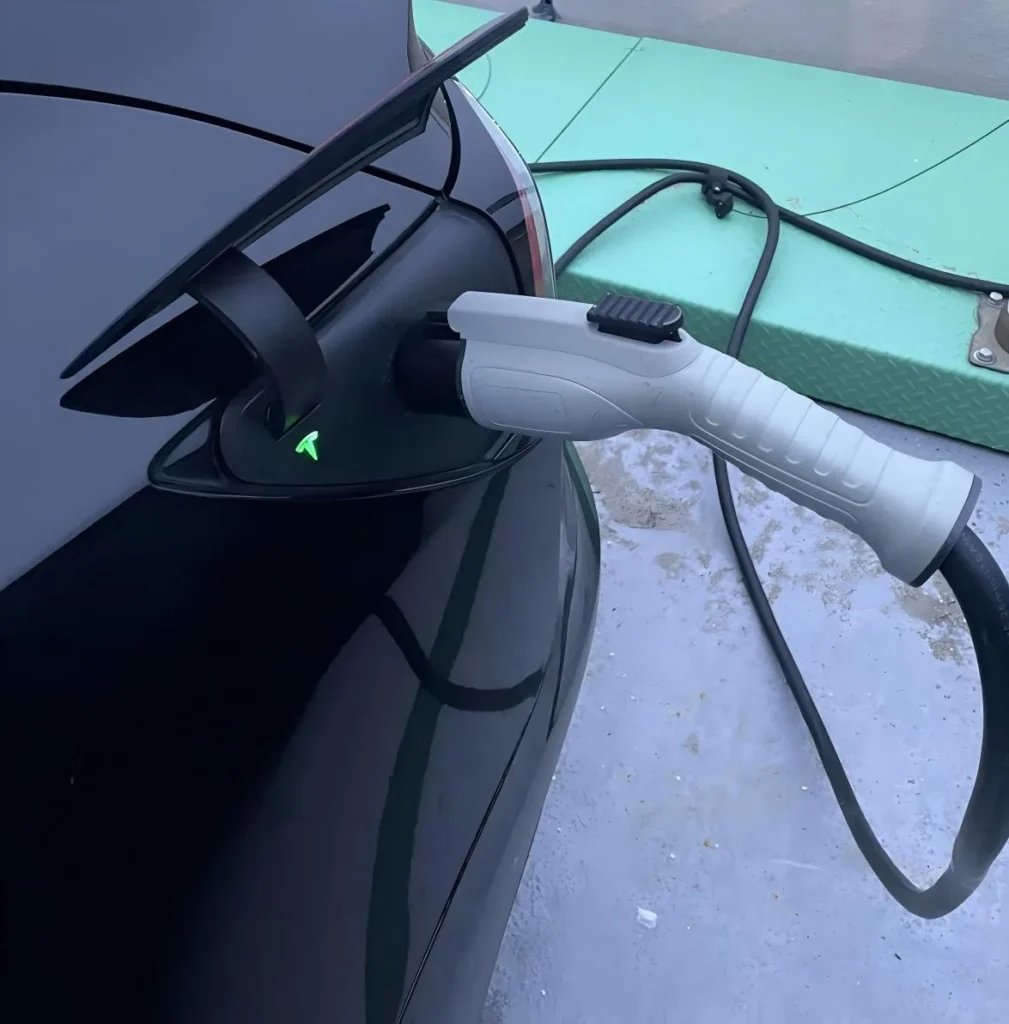
As Tesla’s North American Charging Standard (NACS) continues to gain popularity, more EV drivers are finding themselves charging vehicles equipped with different connector types.
Whether you own a Tesla, Ford, GM, Rivian, Hyundai, Kia, or another electric vehicle, a charging adapter can significantly increase your charging flexibility.
One of the most common questions buyers ask is
Should I choose a 60A or 80A J1772 to NACS adapter?
The answer depends on your vehicle, charging equipment, and future charging needs.
In this guide, we’ll explain what a J1772 to NACS adapter does, why you may need one, and how to choose between 60A and 80A models.
What Is a J1772 to NACS Adapter?
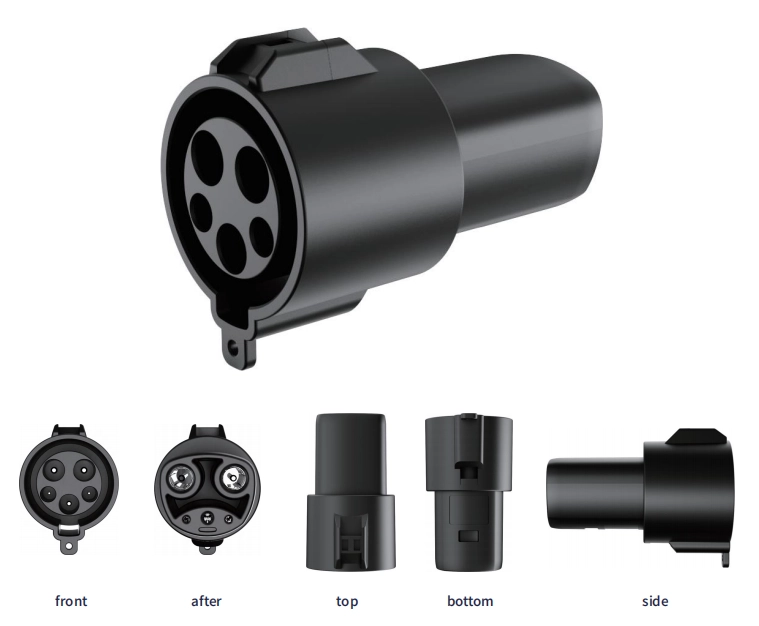
A J1772 to NACS adapter allows a vehicle equipped with a Tesla NACS charging port to connect to a J1772 charging station.
This is particularly useful because thousands of public and private Level 2 charging stations across North America still use the J1772 connector.
With the adapter installed, Tesla owners can access a much larger charging network without replacing existing charging equipment.
Why Do EV Drivers Need a J1772 to NACS Adapter?

Many workplaces, hotels, apartment buildings, shopping centers, and home charging stations were installed before NACS became widely adopted.
These charging stations often provide a J1772 connector.
Without an adapter, Tesla vehicles cannot connect directly.
A J1772 to NACS adapter allows drivers to:
- Access more public charging locations
- Use workplace charging stations
- Share chargers between Tesla and non-Tesla vehicles
- Avoid installing additional charging equipment
- Improve charging convenience during travel
For many Tesla owners, a charging adapter becomes an essential accessory kept in the vehicle at all times.
Understanding Adapter Current Ratings
When shopping for an adapter, you’ll commonly see ratings such as:
- 48A
- 60A
- 80A
The current rating indicates the maximum charging current the adapter can safely handle.
Higher current ratings provide greater compatibility with high-power charging stations and future vehicle upgrades.
60A vs 80A Adapter: What's the Difference?
60A J1772 to NACS Adapter
A 60A adapter can support:
- Most residential Level 2 chargers
- Most public AC charging stations
- Tesla Wall Connectors configured below 60A
- Charging power up to approximately 14.4 kW at 240V
For the majority of EV owners, a 60A adapter is technically sufficient.
Most home charging installations operate between:
- 32A
- 40A
- 48A
A 60A adapter easily handles these charging loads.
80A J1772 to NACS Adapter
An 80A adapter supports:
- High-power AC charging stations
- Commercial charging installations
- Legacy Tesla High Power Wall Connectors
- Future high-current charging requirements
At 240V, an 80A adapter can support up to 19.2 kW of charging power.
Although many modern EVs do not continuously charge at 80A, the higher rating provides additional safety margin and broader compatibility.
Why Is 80A Becoming the Preferred Choice?
Several years ago, many buyers selected adapters based strictly on their current charging needs.
Today, however, the price difference between 60A and 80A adapters is often relatively small.
As a result, many users choose 80A models because they offer:
Greater Compatibility
An 80A adapter works with both lower-power and higher-power charging stations.
Future-Proof Investment
Drivers may upgrade vehicles or charging equipment in the future.
Purchasing an 80A adapter today can eliminate the need for replacement later.
Lower Operating Stress
When charging at 40A or 48A, an 80A-rated adapter operates well below its maximum capacity.
This can reduce heat generation and improve long-term durability.
Commercial Application Flexibility
Businesses, fleet operators, hotels, and charging service providers often prefer 80A adapters because they can accommodate a wider range of customer vehicles and charging stations.
Safety Tips When Using Charging Adapters
To ensure safe charging:
- Purchase adapters from reputable manufacturers.
- Verify the adapter’s current rating.
- Inspect connectors regularly.
- Keep contacts clean and dry.
- Avoid using damaged charging equipment.
- Do not use extension cords with EV chargers.
- Follow all local electrical regulations.
A quality adapter should include temperature-resistant materials, silver-plated contacts, and multiple safety certifications.
Which Adapter Should You Choose?
For most home users charging at 32A to 48A, a 60A adapter can perform perfectly well.
However, if the price difference is minimal, an 80A adapter is often the better long-term investment.
Choose a 60A adapter if:
- Budget is the primary concern.
- You only use residential charging stations.
- Your charging current never exceeds 48A.
Choose an 80A adapter if:
- You want maximum compatibility.
- You use public and commercial charging stations.
- You plan future EV upgrades.
- You prefer additional safety margin and durability.
Final Thoughts
Both 60A and 80A J1772 to NACS adapters can provide reliable charging for Tesla vehicles.
While a 60A adapter is sufficient for most daily charging scenarios, the relatively small price difference has made 80A adapters the preferred option for many EV owners and commercial users.


