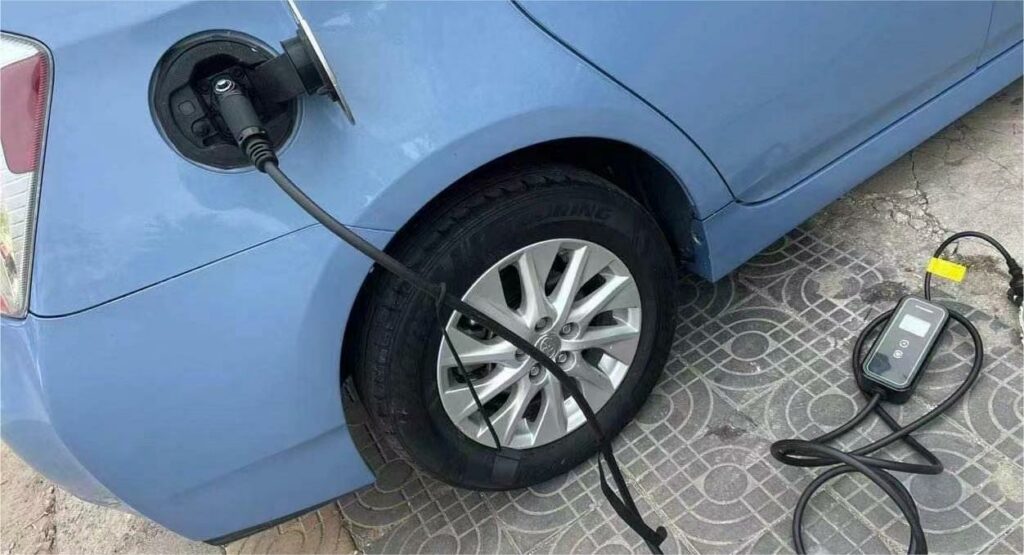
As electric vehicles become more common in shopping malls, office buildings, hotels, public parking lots, and fleet depots, one important detail is often overlooked during charger installation planning: EV charging cable length.
Many buyers focus on charging power, connector standards, or software functions, but cable length directly affects the user experience, parking flexibility, safety, and installation cost.
For commercial charging projects, choosing the correct cable length is not simply “longer is better.” Both AC chargers and DC fast chargers have different design considerations, regulations, and practical limits.
This blog explains the typical cable lengths used in commercial EV charging stations, the differences between AC and DC chargers, and how to select the right cable length for different parking environments.
Why EV Charger Cable Length Matters
In commercial parking lots, EV drivers park vehicles in different positions every day. Unlike home charging, operators cannot expect every car’s charging port to align perfectly with the charger.
A cable that is too short may:
- Prevent the connector from reaching the vehicle
- Cause inconvenience for drivers
- Increase customer complaints
- Limit compatibility with different EV models
Meanwhile, a cable that is too long may:
- Become heavy and difficult to handle
- Increase cable management problems
- Raise production and replacement costs
- Create safety hazards if cables lie on the ground
The ideal cable length should balance:
- User convenience
- Parking flexibility
- Safety
- Cost
- Cable durability
Standard Cable Length for AC EV Chargers
Typical AC Charging Cable Length
For commercial AC chargers, the most common cable lengths are:
| Charger Type | Typical Cable Length |
|---|---|
|
Wall-mounted AC charger |
4m – 5m |
|
Commercial pedestal AC charger |
5m – 7m |
|
Public parking AC charger |
5m – 7.5m |
The most widely used commercial AC cable length today is around 5 meters.
This length is usually sufficient for:
- Side parking spaces
- Front-in parking
- Rear charging-port vehicles
- Most European EV models
Why AC Chargers Usually Use 5m Cables
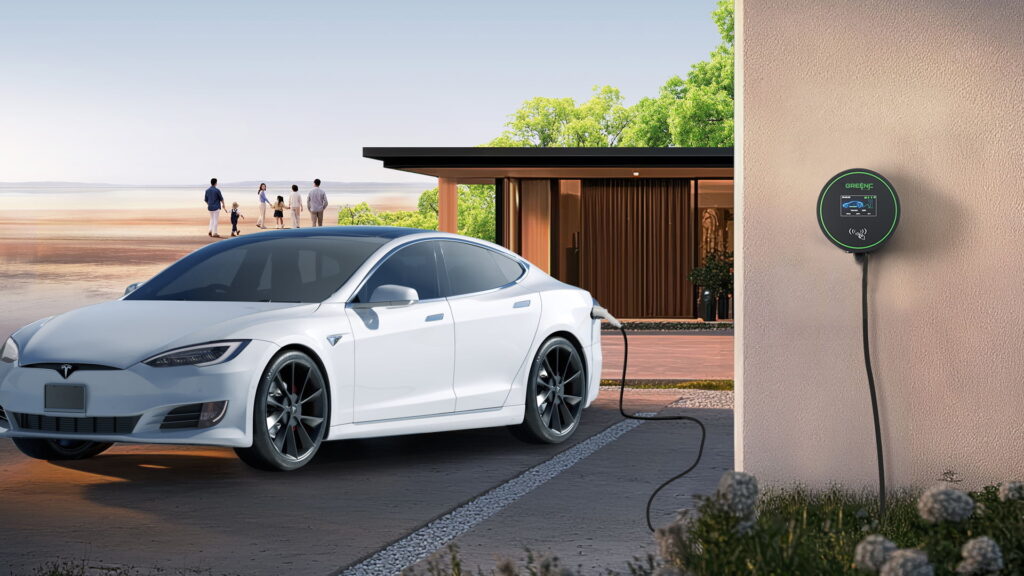
1. Balance Between Reach and Weight
AC charging cables contain copper conductors, insulation layers, shielding, and protective jackets. Longer cables become heavier and less flexible.
For example:
- A 5m Type 2 cable is comfortable for daily use
- A 10m cable may feel bulky and difficult to store
Commercial operators want cables that users can easily handle multiple times every day.
2. Lower Installation and Maintenance Cost
Longer AC cables require:
- More copper material
- Stronger cable support
- Larger internal space inside the charger
- Higher replacement cost
Since commercial parking stations may install dozens or even hundreds of chargers, cable cost becomes important.
3. Reduce Ground Dragging
Very long cables often touch the ground, especially in outdoor parking lots. This may cause:
- Dirt accumulation
- Cable wear
- Vehicle damage
- Safety risks for pedestrians
Shorter cables help maintain cleaner cable management.
AC Charger Cable Length by Parking Scenario
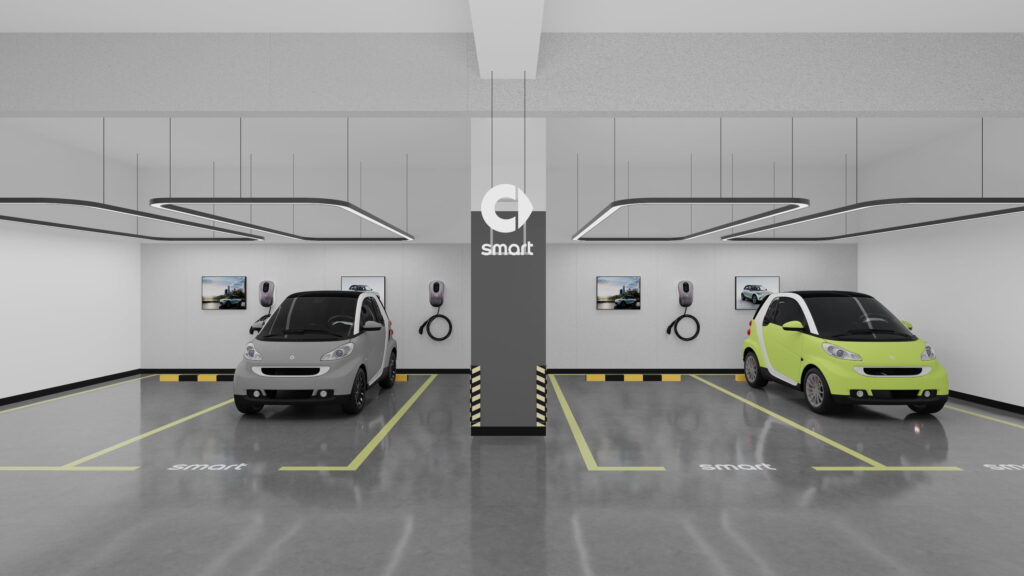
Office Buildings
Recommended length: 5m
Most office parking spaces are fixed and organized. Drivers usually park carefully, so standard cable lengths are sufficient.
Shopping Malls & Public Parking
Recommended length: 5m – 7m
Public users park less consistently. Longer cables provide better flexibility for different EV positions.
Hotel & Destination Charging
Recommended length: 5m – 7.5m
Hotels serve many EV models from different regions. Slightly longer cables improve convenience for guests unfamiliar with charger locations.
Fleet Parking
Recommended length: 4m – 5m
Fleet vehicles often park in fixed positions, allowing shorter cables and more organized cable management.
Standard Cable Length for DC Fast Chargers
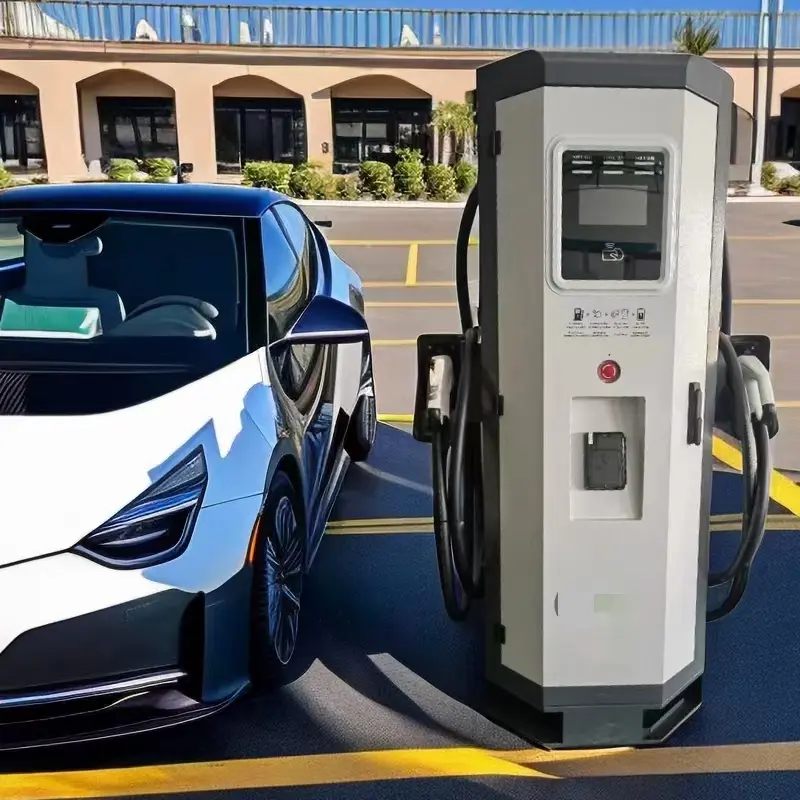
Typical DC Charger Cable Length
DC fast chargers usually use:
| DC Charger Power | Typical Cable Length |
|---|---|
|
60kW – 120kW DC charger |
3m – 5m |
|
150kW – 240kW charger |
3m – 4m |
|
High-power HPC charger |
3m – 4m |
Unlike AC chargers, DC charging cables are generally shorter.
Why DC Fast Charging Cables Are Shorter
1. DC Cables Are Much Heavier
DC fast charging cables carry extremely high current.
Examples:
- 120kW charger may output over 250A
- 240kW charger may exceed 500A
To handle this current safely, DC cables use:
- Larger copper conductors
- Thick insulation
- Liquid cooling systems (for HPC chargers)
As power increases, cable weight increases significantly.
A long DC cable can become extremely difficult for users to lift and operate.
2. Voltage Drop and Heat Generation
Longer DC cables create:
- More electrical resistance
- Higher heat generation
- Greater energy loss
Shorter cables help improve:
- Charging efficiency
- Temperature control
- System reliability
This is especially important for ultra-fast charging stations.
3. Cooling System Limitations
Many high-power DC chargers use liquid-cooled cables.
Longer cables require:
- More cooling liquid
- Stronger pumps
- More complex cooling systems
This increases both manufacturing and maintenance cost.
Commercial DC Charging Parking Design
Because DC cables are shorter, parking design becomes more important.
Most commercial DC charging stations use:
- Center-mounted chargers
- Pull-through layouts
- Carefully positioned charging cabinets
The goal is to ensure the connector can easily reach:
- Front charging ports
- Rear charging ports
- Left or right side ports
Without requiring excessively long cables.
Different EV Charging Port Positions Affect Cable Length
One major challenge in commercial parking lots is that EV charging ports are located differently depending on vehicle brands.
Examples:
- Tesla: rear side
- Nissan Leaf: front center
- BYD: front side
- BMW: side rear
- Some commercial vans: front grille area
Commercial charging operators must consider all these layouts when selecting cable length.
That is why public charging stations often choose slightly longer cables compared with residential chargers.
Are Longer EV Charging Cables Always Better?
Not necessarily.
While longer cables improve flexibility, they also create disadvantages:
| Longer Cable Advantages | Longer Cable Disadvantages |
|---|---|
|
Easier vehicle access |
Higher cost |
|
Better compatibility |
Heavier handling |
|
More flexible parking |
More cable wear |
|
Improved user convenience |
Greater safety risk |
The best solution is usually:
- Proper charger positioning
- Smart parking design
- Reasonable cable length
- Good cable management systems
Regional Differences in EV Charger Cable Length
Europe
- Type 2 AC cables commonly use 5m
- Public charging stations may use 7m cables
North America
- commercial AC chargers usually use 18ft – 25ft (5.5m – 7.6m).
- Typical DC Cable Length normally is 10ft – 16ft (3m – 5m)
Asia
- Compact parking spaces often favor shorter cable designs, 3m. – 5m
- DC fast charging stations usually optimize charger placement instead of increasing cable length, 3m – 4m.
Conclusion
In commercial EV charging projects, cable length is a critical part of charger design and user experience.
For AC chargers, the industry standard is usually:
- 5m to 7m
For DC fast chargers:
- 3m to 5m
The ideal cable length depends on:
- Parking layout
- Vehicle types
- Charger power
- User behavior
- Safety considerations
Rather than simply choosing the longest cable possible, commercial charging operators should focus on balancing:
- Convenience
- Durability
- Cost efficiency
- Safety
- Charging performance
As EV adoption continues to grow worldwide, optimized cable design and parking planning will become increasingly important for successful commercial charging infrastructure.